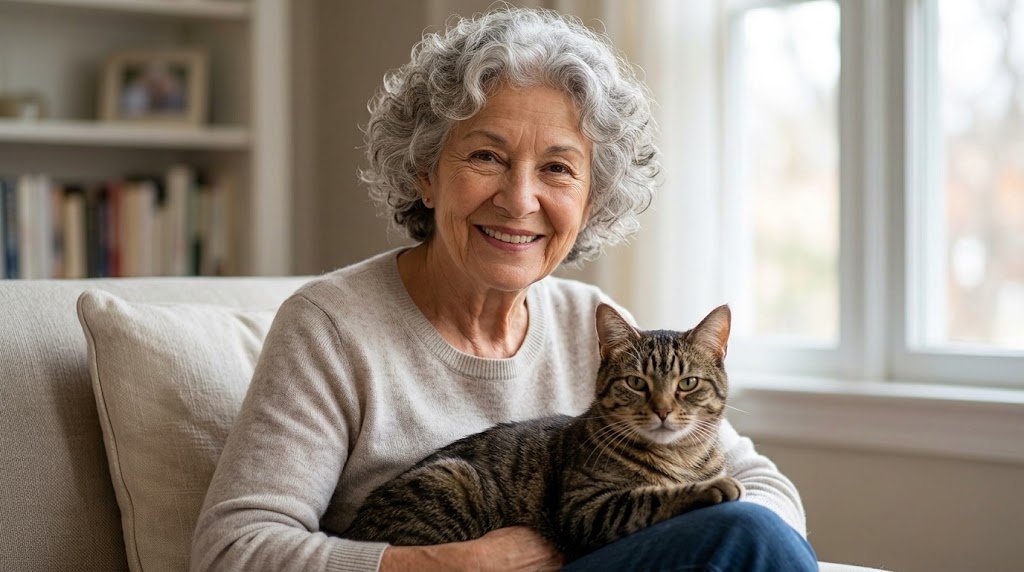
Choosing a pet for an older adult isn’t really about the animal. It’s about the person’s next ten years: their energy, their health, their budget, and who will step in if life changes.
Get it right, and a pet can bring purpose, routine, and daily joy. Get it wrong, and the same pet can become a fall risk, a money worry, or a source of stress.
Pets are already a big part of later life. In a University of Michigan poll conducted in September 2025, 55% of adults age 50 and older said they have a pet, most commonly dogs (70%) and cats (50%).
This guide explains how to choose a pet for an elderly person step by step. You’ll get a simple matching method, a comparison of the best pets for seniors, key safety risks, and a plan for the future.
If easy day-to-day care is an important factor, cats may be worth considering as a companion. Read our blog, Are Cats Low Maintenance Pets?, to learn what caring for a cat really involves.
Why the Right Pet Matters So Much in Later Life
The benefits are real. Among pet owners 50 and older in that same poll, 83% said their pets give them a sense of purpose, and 71% said their pets help them enjoy life. Owners also said pets connect them with others (70%), make them feel loved (64%), and reduce stress (63%).
But there’s a flip side that many guides skip. 31% of pet owners age 50 and older agreed that having a pet strains their budget. That’s a sharp jump, since owners in 2025 were more likely than their 2018 counterparts to say this (31% vs. 18%).
The lesson is simple. A pet only improves quality of life when the match fits the person’s real life, not their ideal one.
How to Choose a Pet for an Elderly Person: The 5-M Match Method
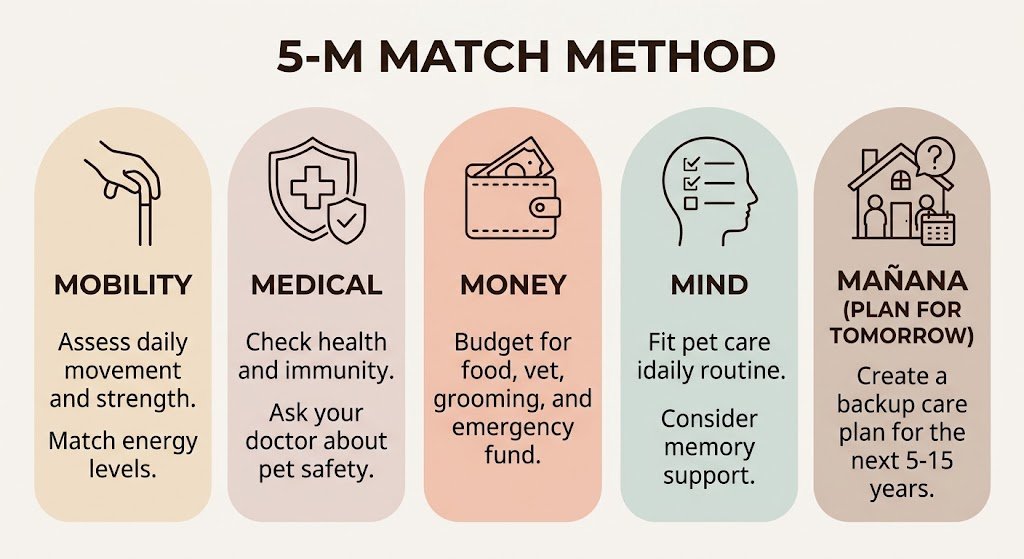
Use these five checks before visiting any shelter or breeder. If a pet fails one, keep looking.
1. Mobility: Match Energy to Energy
Be honest about daily movement. A person who walks slowly or uses a cane shouldn’t be paired with a strong or bouncy dog.
Ask these questions:
- Can they bend down to fill bowls or clean a litter box?
- Can they manage a leash in rain, ice, or heat?
- Would a pet that jumps up or pulls cause a stumble?
A calm adult cat or a small, well-trained adult dog often suits limited mobility better than a puppy or kitten.
2. Medical: Consider Health and Immunity
Aging changes how the body fights germs. According to the CDC, older adults are more likely to get sick from germs some animals, even household pets, can carry, and their illness may be more severe.
This rules some pets out. Because they are more likely to carry certain germs, reptiles and amphibians aren’t recommended for households with young children, people with weakened immune systems, or adults 65 and older. The CDC’s higher-risk list also includes backyard poultry and rodents such as hamsters, guinea pigs, rats, and mice.
Allergies, heart conditions, and memory changes matter too. Ask the person’s doctor before deciding.
3. Money: Budget Beyond Adoption Day
The adoption fee is the smallest cost. The ASPCA estimates about $1,149 a year for a cat and $1,391 for a dog. Emergencies can cost far more.
For someone on a fixed income, plan for food, vet visits, grooming, pet sitting, and a small emergency fund. If the numbers feel tight, a lower-cost pet or an alternative (covered below) may be kinder.
4. Mind: Fit the Pet to Daily Routine and Memory
Pets thrive on routine, and so do many older adults. That can be a great match.
However, if memory is slipping, missed meals or doubled doses of pet medication become real risks. Simple tools help, like automatic feeders, pill organizers for pet medicine, and a daily checklist on the fridge.
5. Mañana: Plan for Tomorrow
This is the question most families forget. The University of Michigan researchers advise that older adults think about how their lives might change in 5, 10, or even 15 years and whether those changes could affect their ability to care for a pet long term.
A kitten adopted at 80 may outlive its owner. That’s not a reason to say no. It’s a reason to make a backup plan first.
Best Pets for Seniors: A Side-by-Side Comparison
No pet is perfect for everyone. Here’s how the most common options compare for older adults.
| Pet | Daily Effort | Mobility Needed | Companionship | Best For |
|---|---|---|---|---|
| Adult or senior cat | Low to moderate | Low | High | Homebodies, apartments, limited mobility |
| Small, calm adult dog | Moderate to high | Moderate | Very high | Active seniors who enjoy daily walks |
| Senior dog (7+ years) | Moderate | Low to moderate | Very high | People wanting a calm, settled companion |
| Small birds (canaries, budgies) | Low to moderate | Low | Moderate | People who enjoy song and gentle interaction |
| Fish (aquarium) | Low, with regular tank care | Low | Low | Relaxation, very limited mobility |
| Rabbits, guinea pigs | Moderate to high | Moderate (floor-level care) | Moderate | Not ideal for most; CDC flags rodents as higher risk |
| Reptiles, amphibians | Varies | Varies | Low | Not recommended for adults 65+ (CDC) |
The standout choice for many: an adult or senior cat. Cats don’t need walks, use a litter box by instinct, and often love a quiet lap.
For active seniors: a small adult dog adds walks, routine, and social contact with neighbors.
Why an Older Pet Is Often the Smartest Choice
Puppies and kittens are adorable, but they’re also fast, chewy, and full of surprises. For many older adults, an adult or senior animal is the wiser pick.
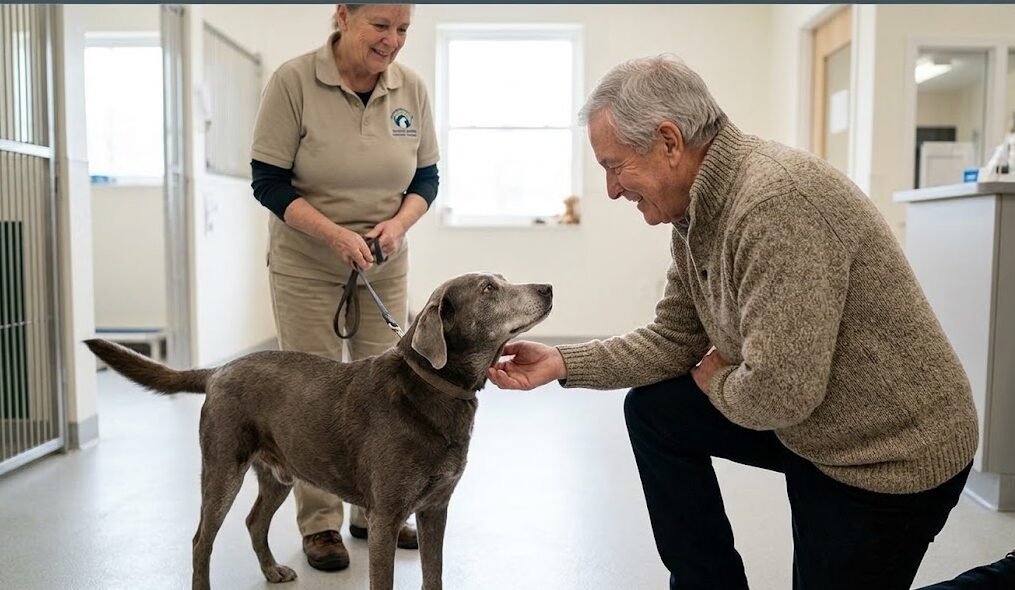
- Known personality. Shelter staff can tell you if the pet is calm, cuddly, or shy.
- Fewer surprises. Most adult pets are already house-trained.
- Better lifespan match. An older pet is less likely to outlive its owner by many years.
- Lower fall risk. Calm pets are less likely to dart underfoot.
Money help exists, too. The Pets for the Elderly Foundation helps pay fees at participating U.S. shelters for seniors age 60 and over who adopt a dog or cat, including pre-adoption vet exams and spay/neuter if part of the fee. Ask local shelters whether they participate or run their own senior discount.
Safety First: How to Prevent Pet-Related Falls
Falls are the hidden risk in pet ownership for older adults. A CDC study found that an estimated 86,629 fall injuries each year were associated with cats and dogs, and injury rates were highest among people aged 75 and older.
How did they happen? About 66.4% of falls associated with cats and 31.3% of falls associated with dogs were caused by falling or tripping over the pet. Walking dogs and chasing pets were linked to the greatest number of injuries.
Simple ways to lower the risk:
- Choose calm over energetic. Skip dogs that pull or jump.
- Invest in training. The CDC backs obedience training for dogs to minimize behaviors like pushing or pulling.
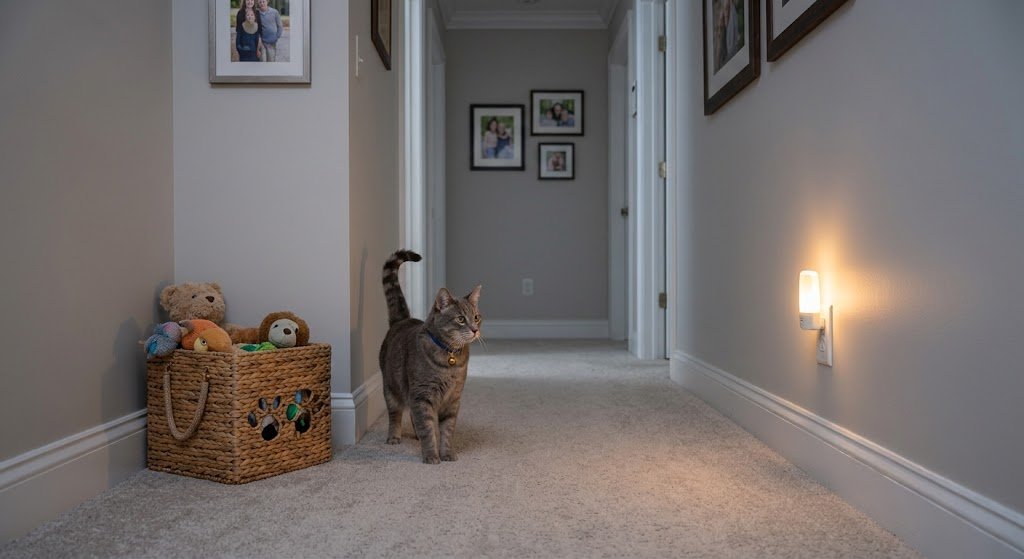
- Add a bell to the collar. It helps you hear a cat nearby.
- Keep floors clear. Store toys in a basket and bowls out of walkways.
- Use night lights. Many trips over pets happen in the dark.
- Try a hands-free leash or a short, fixed-length lead instead of a retractable one.
Plan for the Future Before You Adopt
A responsible plan protects both the person and the pet.
- Name a backup caregiver. Pick a family member, friend, or neighbor who agrees in writing.
- Keep a pet care sheet. List food, medications, vet contact, and habits.
- Carry an emergency card. Note that a pet is home alone, in case of hospitalization.
- Think about legal options. Some people set up a pet trust or add pet wishes to their will. Talk to an estate attorney.
- Check housing rules. Senior communities and rentals often limit pet size or type.
Health care matters here as well. The University of Michigan team notes that a patient might hesitate to have surgery if no one can care for their pet during recovery. A backup plan removes that barrier.
Not Ready for Full Ownership? Try These Alternatives
Sometimes the best answer is “not yet” or “not full time.” Researchers suggest that for some older adults, fostering, pet sitting, or spending time with a friend’s or family member’s pet may offer companionship and other benefits without the full responsibilities of ownership.
Other options include volunteering at a shelter, joining a local dog-walking group, or welcoming therapy animal visits. Fostering also works as a “trial run” before committing.
Quick Checklist: Is This Pet the Right Fit?
Answer yes to most of these before bringing a pet home:
- Can the person handle daily care without strain or fall risk?
- Has their doctor agreed the pet is safe for their health?
- Does the budget cover yearly costs plus emergencies?
- Does the home or community allow this pet?
- Is there a named backup caregiver?
- Does the pet’s energy match the person’s energy?
FAQ
What is the best pet for an elderly person living alone?
For many, an adult or senior cat is the best fit. Cats are independent, don’t need walks, and still offer affection. A calm small dog can work well for active seniors who enjoy walking.
Should seniors adopt a puppy or kitten?
Usually not. Young animals need training, move quickly underfoot, and may live 15 years or more. An adult pet with a known temperament is often safer and easier.
What pets should elderly people avoid?
The CDC doesn’t recommend reptiles or amphibians for adults 65 and older because of germ risks. Large, high-energy dogs can also raise fall risk for people with balance problems.
Is it a good idea to give an elderly parent a pet as a gift?
Only if they want one and help choose it. A surprise pet can create stress and unplanned costs. Involve your parent in every step, from budget to meeting the animal.
What happens to the pet if the owner goes into care or passes away?
That depends on the plan made in advance. Name a backup caregiver, keep care notes, and ask an attorney about including the pet in estate plans.
Conclusion
Knowing how to choose a pet for an elderly person comes down to fit. Match the pet’s energy to the person’s mobility, check health risks with a doctor, set a realistic budget, and plan for the years ahead.
For many older adults, a calm adult cat or a small, settled dog is the sweet spot. For others, fostering or visiting pets brings the joy without the pressure.
Ready to start? Visit a local shelter, ask about senior adoption programs, and meet a few adult pets in person. Then use the checklist above before signing any papers.
Sources
- University of Michigan National Poll on Healthy Aging, “How Pets Contribute to Healthy Aging: Benefits, Challenges, and Changing Perceptions” (February 2026).
- CDC, “People at Increased Risk for Illness from Animals” and “Reptiles and Amphibians” (Healthy Pets).
- CDC, Morbidity and Mortality Weekly Report: Nonfatal Fall-Related Injuries Associated with Dogs and Cats, United States, 2001–2006.
- ASPCA annual pet care cost estimates.
- Pets for the Elderly Foundation (petsfortheelderly.org).