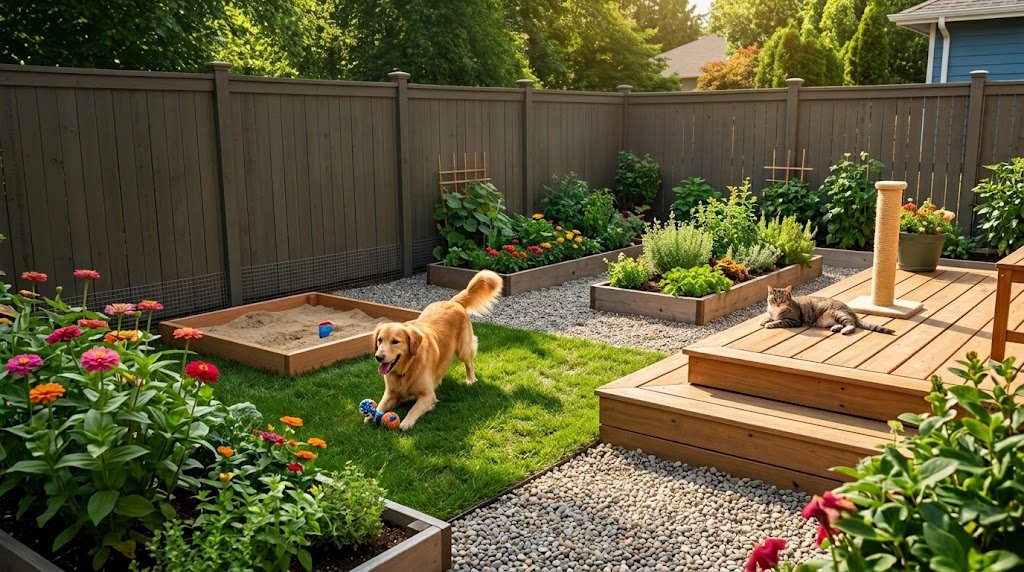
How to create a pet-friendly garden, do four things. Choose non-toxic plants, secure the boundaries, avoid harmful products, and give your pet safe spaces to dig, rest, and play. No garden is risk-free, but these steps cut the most common dangers. They also keep the space enjoyable for you.
Below, you’ll find what to plant, what to avoid, and how to lay out the space. You’ll also see which popular beliefs don’t hold up.
A pet-friendly garden can make outdoor time more enjoyable, especially for dogs that love to explore and play. Read our blog, Top 5 Dog Breeds, to discover which breeds may be a good fit for your lifestyle.
Start With Your Pet’s Habits
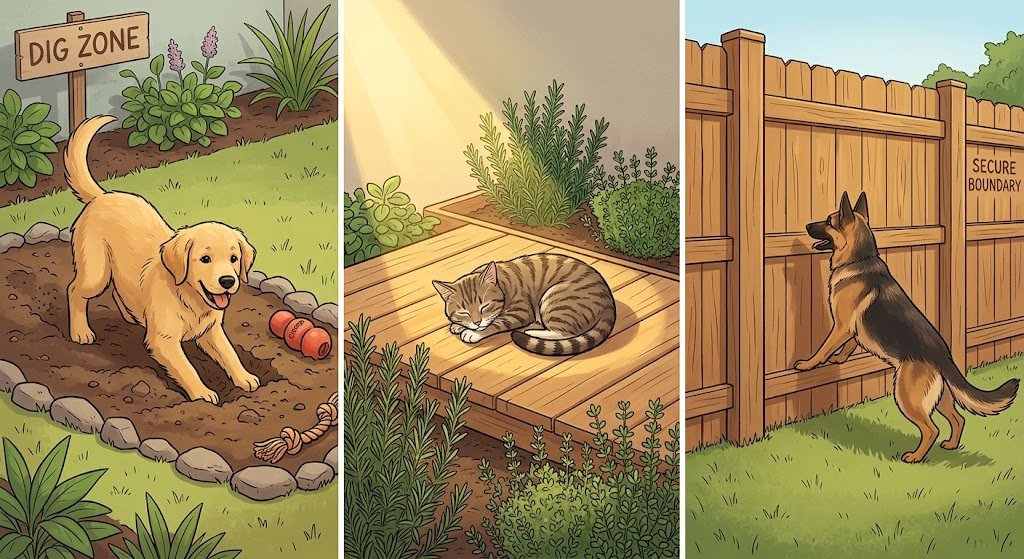
Every pet uses a garden differently. A young Labrador may dig and chew. An older cat may only want a sunny spot. Watch your pet for a week before you plan anything.
Ask a few simple questions:
- Does your pet dig, chew plants, or patrol the fence?
- Where does it rest, and where does it use the toilet?
- Does it stay in the yard, or try to escape?
Your answers shape every later choice. A chewer needs safer plants. A digger needs a place where digging is allowed. A jumper needs taller fences.
Choose Non-Toxic Plants
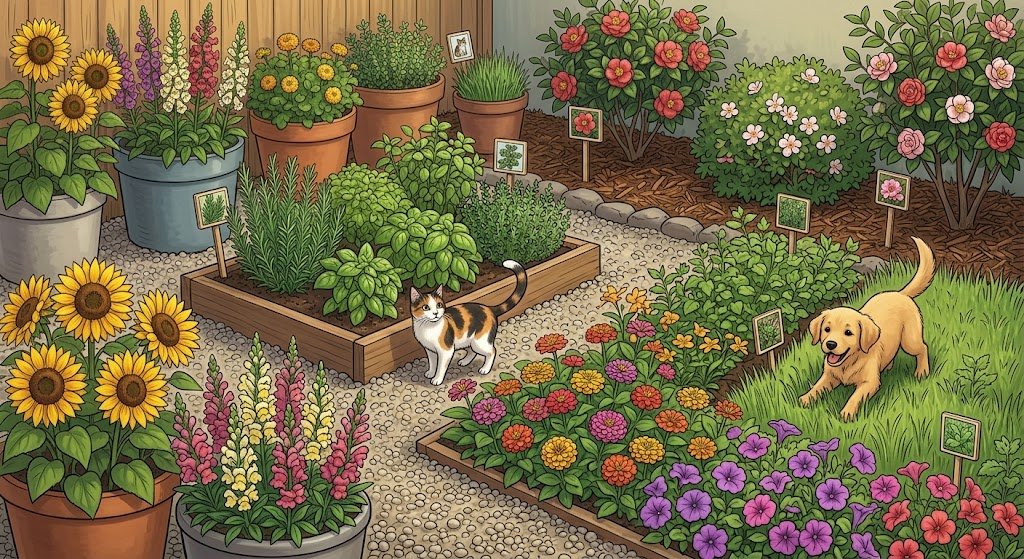
Plant choice matters most. Many common garden plants can make pets ill. Some can be deadly.
The American Society for the Prevention of Cruelty to Animals (ASPCA) keeps a searchable database of toxic and non-toxic plants for dogs, cats, and horses. Check it before you buy anything. Also check the scientific name, since common names vary between regions.
Plants to Avoid
Veterinary sources widely flag these plants as dangerous:
- Lilies (true lilies and daylilies): Very toxic to cats. Even small amounts, including pollen, can cause kidney failure.
- Sago palm: All parts are poisonous to dogs. The seeds are the most dangerous.
- Oleander and foxglove: Both contain compounds that affect the heart.
- Autumn crocus: Can cause severe illness in dogs and cats.
- Azalea and rhododendron: These can upset the stomach and, in larger doses, affect the heart.
- Onions, garlic, and chives: These can damage red blood cells in dogs and cats.
- Grapes: Grapes and raisins can cause kidney failure in some dogs. The exact cause is still unclear.
Safer Options
The ASPCA lists the following as non-toxic. Non-toxic does not mean “harmless in any amount.” A pet that eats a lot of any plant may still get an upset stomach.
| Type | Examples |
|---|---|
| Flowers | Sunflower, snapdragon, zinnia |
| Herbs | Rosemary, basil, thyme |
| Shrubs | Camellia |
| Cat treats | Cat grass, catnip |
Plant a small patch of cat grass or catnip. Cats often chew whatever is nearby. Giving them an approved option may reduce damage to your other plants. Results vary by cat.
Watch Out for Hidden Hazards
Plants are only part of the picture. Many dangers come from things gardeners add or overlook.
Mulch, Compost, and Soil
Cocoa bean mulch smells sweet, but it contains theobromine. This is the same compound that makes chocolate toxic to dogs. Wood chips are usually a safer choice. Avoid mulch that looks moldy.
Compost piles need care too. Rotting food can grow molds that cause tremors in dogs. Use a closed bin with a secure lid.
Chemicals
Some slug baits contain metaldehyde, which is poisonous to pets. Rodent poisons are also risky, both directly and through poisoned prey. Weed killers and fertilizers vary widely. Read each label and follow the pet-safety directions.
One common myth is that “organic” means safe. That is not always true. Some natural products, such as certain bone meals and blood meals, can tempt dogs to eat large amounts and cause illness. Store all garden products in a locked shed, and keep pets away from freshly treated areas until the label says it is safe.
Mushrooms and Water
Some wild mushrooms are toxic, and most people cannot identify them reliably. Remove mushrooms as they appear. Also empty standing water, since it breeds mosquitoes and can grow harmful microbes. Blue-green algae in ponds can be toxic to dogs. Cover or fence off ponds if your pet is a keen swimmer.
Design the Layout for Real Behavior
Good design works with your pet’s instincts instead of fighting them.
Secure the Boundaries
Check your fence for gaps, loose boards, and low spots. Many dogs can squeeze through smaller holes than you’d expect. For diggers, bury wire mesh along the base of the fence. For climbers or jumpers, a taller fence, or an angled top, may help. The right height depends on the dog’s size and athletic ability. Cats often need taller fencing or a “catio” enclosure.
Divide the Garden Into Zones
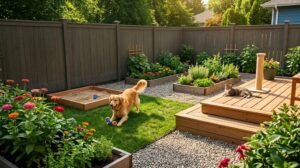
Simple zones make a garden easier for pets to understand and easier for you to maintain:
- Play area: open lawn or durable ground cover.
- Dig zone: a sandbox or loose-soil patch where digging is allowed.
- Shade and rest spot: a shelter or shaded seating area, especially in hot weather.
- Water station: fresh water placed in shade.
- Off-limits beds: raised beds or fenced sections for plants you want to protect.
Build a Dig Zone
Some dogs dig out of boredom, heat, or instinct. Stopping it entirely is difficult. Instead, offer a sandbox or a loose-soil corner. Bury a toy or treat there, and praise your dog when it digs in that spot. This works in many cases, though it takes patience.
Create Paths and Play Space
Dogs often run the same route again and again. Over time, that wears away grass and plants. Try laying a clear path along the fence line. Use pea gravel, flat stones, or mulch. Keep flower beds behind raised edges or low borders so pets see them as off-limits.
Provide Shade and Water
Pets can overheat in summer. Add shade from trees, shade sails, or a covered patio. Set out a heavy, tip-resistant water bowl. In hot weather, remember that stone, concrete, and dark surfaces can burn paw pads. If you can’t hold your hand on a surface for several seconds, it’s too hot for paws.
Choose Pet-Friendly Surfaces
- Grass: soft and natural, but urine can cause brown patches. Hardy grass types cope better.
- Pea gravel or smooth stone: good for paths and potty zones. Avoid sharp rock.
- Artificial turf: low mess, but it can get hot and needs regular cleaning.
- Mulch: choose pet-safe types and avoid cocoa bean mulch.
Handle the Lawn Thoughtfully
Urine spots are a frequent complaint. Dog urine contains nitrogen, which in high amounts can leave brown patches. Some owners water the area soon after their dog urinates. This may dilute the effect, but evidence is mostly practical experience rather than strong research.
Tougher grasses, such as tall fescue, often handle wear better than delicate types. Clover mixes can also hide small spots. Choose what suits your local climate.
Also consider dry regions. Sharp grass seeds, often called foxtails, can lodge in ears, noses, and paws. Cut or remove them before they mature.
Common Myths
- “Pets instinctively avoid poisonous plants.” Not reliably. Curious puppies and bored cats often chew things they shouldn’t.
- “If a plant is sold in a garden center, it’s safe.” Stores sell many toxic plants. Labels rarely mention pets.
- “Only dogs are at risk.” Cats face special dangers, especially from lilies.
- “One safe list covers every animal.” Rabbits, birds, and horses react differently. Check a source for your species.
Quick Garden Safety Checklist
- Fencing and gates are secure
- Toxic plants removed
- Pet-safe mulch and pest products only
- Shade and fresh water available
- Dig zone and play area set up
- Compost, chemicals, and tools stored away
FAQ
What are the safest flowers for a garden with dogs?
Sunflowers, snapdragons, and zinnias are commonly listed as non-toxic by the ASPCA. Always confirm the exact species before planting.
Can I keep a vegetable garden with pets?
Yes, with care. Avoid onions, garlic, chives, and grapes. Fence off beds, and note that tomato and potato plants (leaves and stems) can upset pets.
What should I do if my pet eats something toxic?
Contact your vet or a pet poison hotline right away. Bring the plant or product label if possible. Don’t induce vomiting unless a professional tells you to.
How do I stop my dog from digging up plants?
Offer a dedicated dig zone, add exercise, and protect beds with borders or fencing. Digging often points to boredom or heat.
Are ornamental grasses safe?
It depends on the species. Some are fine. Others have sharp blades or seed heads that can cause injury. Check each one.
Conclusion and Key Takeaways
Learning how to create a pet-friendly garden is mostly about planning ahead. You watch your pet’s habits, choose safer plants, and keep chemicals locked away. You then build a layout that suits natural behavior. No approach removes all risk, so stay observant and adjust as you go.
Key takeaways:
- Check every plant against the ASPCA database before buying.
- Avoid lilies, sago palm, cocoa mulch, and metaldehyde slug bait.
- Secure fences, and give diggers a legal place to dig.
- Provide shade, fresh water, and cool walking surfaces.
- When in doubt, call your vet.
Note: This article is general information, not veterinary advice. Confirm plant safety with your vet or the ASPCA.