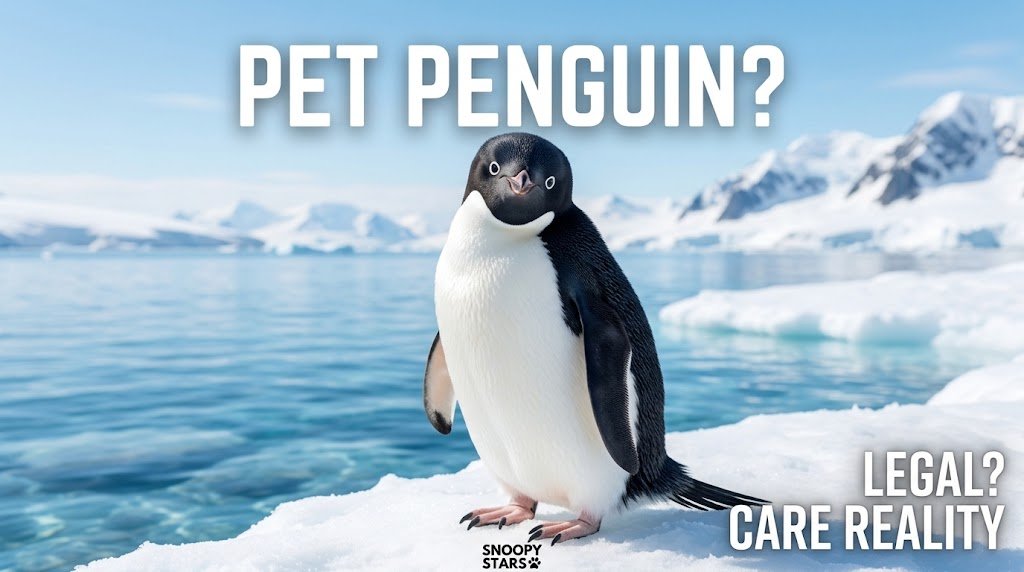
No, you cannot have a penguin as a pet. In almost every country worldwide, it is illegal to own a penguin privately. Can you have a penguin as a pet in your home? The answer remains no—penguins are protected under international wildlife laws. Even in places where penguin ownership might seem possible, strict regulations make it practically impossible for regular people.
This article explains why can you have a penguin as a pet is not a simple yes-or-no question, the legal barriers, and what you should consider instead.
Why Can You Have a Penguin as a Pet Isn’t Possible
International Legal Protection
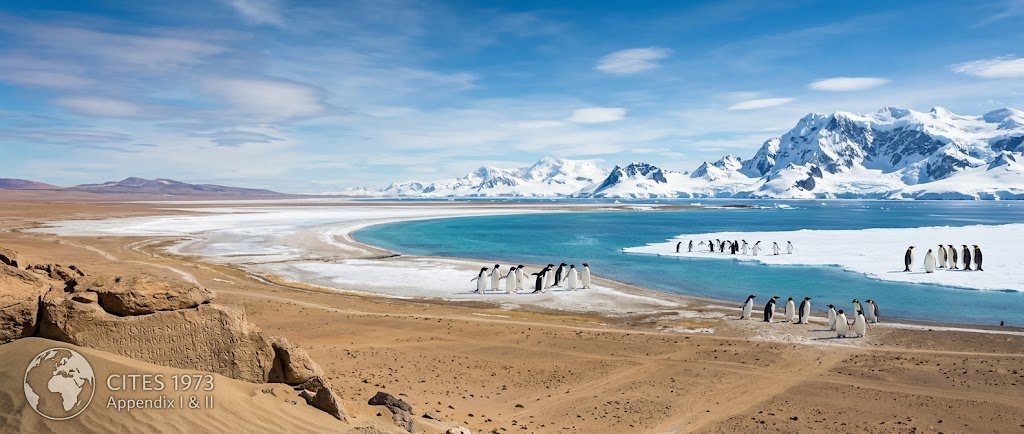
Penguins are protected under the Convention on International Trade in Endangered Species of Wild Fauna and Flora (CITES). This is an international agreement signed by 183 countries. It prohibits the trade, capture, and private ownership of most penguin species.
CITES was established in 1973 to regulate wildlife trade globally. It operates through a permit system that strictly controls which animals can cross international borders. Penguins fall into Appendix I and II categories, meaning their trade is heavily restricted or banned entirely.
The protected species list includes all penguin varieties. Whether you live in a tropical country or polar region, CITES enforcement remains the same. You cannot import penguin chicks, eggs, or adult birds legally without a permit—and individual permits for pets simply do not exist.
Penguin Conservation Status
According to the International Union for Conservation of Nature (IUCN), 18 penguin species exist worldwide.
- 3 species are listed as endangered: African penguin, Yellow-eyed penguin, and Erect-crested penguin.
- 6 species are vulnerable: Galapagos, Fiordland, Snares, Gentoo, Chinstrap, and Northern Rockhopper penguins.
- 9 species are near-threatened or of least concern, including Emperor and Adelie penguins.
Even species with stable populations cannot legally be owned as pets. The reason is not just population numbers—it is also about maintaining ecosystem balance and preventing the illegal wildlife trade industry from expanding.
Why CITES Protects Penguins So Strictly
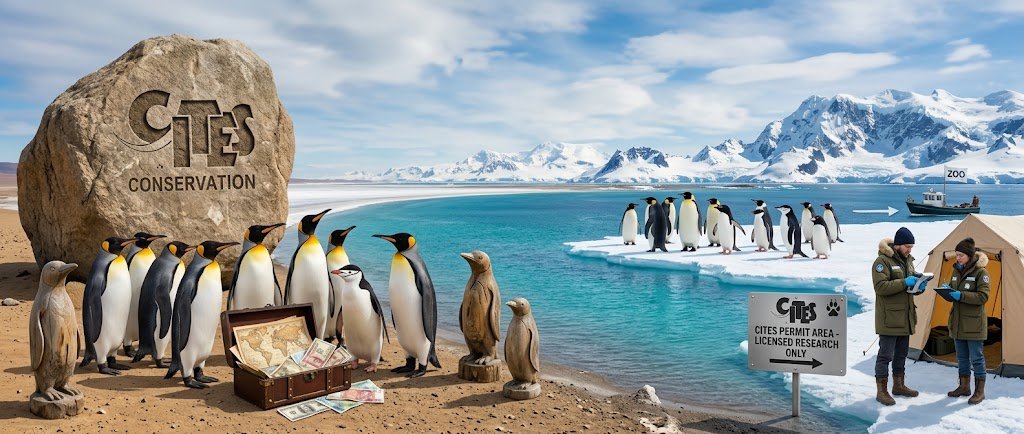
The black market for exotic birds is worth approximately $23 billion annually worldwide. Penguins are valuable targets because they are rare, exotic, and appealing to wealthy collectors.
CITES Appendix I listing means commercial trade is prohibited for virtually all penguin species. Even non-commercial breeding for pets is forbidden. The only exception is research institutions and zoos with special permits, which require government approval and regular inspections.
National Legal Frameworks
Every country with native penguin populations has strict wildlife laws. The following examples illustrate the legal mechanisms that make private penguin ownership extremely difficult or prohibited.
Antarctica and Sub-Antarctic Regions
The Antarctic Treaty System (ATS), signed in 1959, designates Antarctica as a scientific preserve. Article II of the treaty prohibits removing fauna from the continent without explicit scientific permits.
- The Antarctic Treaty
- The Protocol on Environmental Protection
- CCAMLR (Commission for Conservation of Antarctic Marine Living Resources)
Practically, this means private individuals cannot legally capture Emperor or Adelie penguins from Antarctica for private ownership.
Australia
Penguins are protected under the Wildlife Act (1975) and Wildlife Regulation (2016) in Australia. Possession without a permit is a criminal offense.
- Fines up to AU$10,000
- Up to 6 months imprisonment
- Seizure of the animal and equipment used
- Additional civil liability if injury occurs
The law applies to capturing wild penguins, transporting penguins across state lines, breeding penguins without authorization, and possessing penguin eggs or chicks.
South Africa
The National Environmental Management: Biodiversity Act (2004) lists penguin species as protected species under Schedule 2. South Africa also enforces CITES regulations strictly.
- Fines up to ZAR 1 million
- Up to 10 years imprisonment for serious trafficking cases
- Confiscation of animals and property used
- Criminal record affecting employment and travel
New Zealand
The Wildlife Act (1953) makes penguin ownership illegal. Additional regulations include the Wildlife Amendment Act (2005) and enforcement by the Department of Conservation.
- Fines up to NZD $10,000
- Potential imprisonment for trafficking cases
- Confiscation of animals
- Liability for habitat damage
United States
Federal law prohibits importing penguins under multiple statutes. The Migratory Bird Treaty Act and Endangered Species Act provide additional protections for applicable species.
- Fines up to $100,000 per violation
- Up to 1 year imprisonment
- Confiscation of animals and property
- Criminal consequences under federal law
Chile and Peru
Both countries protect penguins under national environmental laws and CITES enforcement. Chile’s National Fisheries Service (SERNAPESCA) actively prosecutes wildlife trafficking.
United Kingdom and European Nations
The EU Wildlife Trade Regulations and national laws protect penguin species. The UK’s Wildlife and Countryside Act also applies to penguins kept in British territory.
The Global Pattern
Despite geographic, political, and cultural differences, countries with penguin populations maintain strict legal protections. International enforcement agencies coordinate to combat wildlife trafficking, and seized penguins are typically sent to rehabilitation centers or approved zoos rather than private homes.
Physical and Behavioral Reasons Penguins Make Terrible Pets
Even if legal restrictions did not exist, the physical and biological requirements of penguins make home ownership completely impractical. Can you have a penguin as a pet from a care perspective? The answer is definitively no because of their biological requirements.
Extreme Environmental Needs
Penguins require highly specific conditions that home environments cannot provide. Their needs are not comparable to typical pet birds or even other aquatic animals.
Temperature Requirements
Penguins evolved in cold marine environments, and their physiology depends on precise temperature ranges.
- Optimal water temperatures: 50–60°F (10–15°C)
- Most species experience lethal overheating above 72°F (22°C)
- Hypothermia begins below 45°F (7°C) without shelter access
- Different penguin species prefer different ranges
- Optimal air temperature: 45–55°F (7–13°C)
Why Temperature Matters
Penguins have a unique thermoregulation system. Their feathers contain approximately 100 feathers per square inch, compared with 8–10 feathers per square inch in most birds. This dense plumage traps air for insulation, but the same adaptation makes penguins susceptible to overheating.
When penguins become too warm, their bodies must work harder to release heat. Chronic heat stress can result in serious health and behavioral problems.
Water Access and Habitat Requirements
Penguins spend approximately 75–80% of their lives in water. Continuous access to appropriate swimming water is an essential part of their biology.
Swimming Requirements
- Continuous water access
- Water depth of at least 6–8 feet
- Swimming space of at least 30–40 feet per tank direction
- Multiple levels and environmental complexity
A single penguin may require more than 20,000 cubic feet of water space. Proper facilities also require carefully managed water quality, filtration, oxygen levels, salinity, and temperature.
Specialized Water Equipment
- Industrial-grade chiller: $15,000–$50,000
- Filtration system: $20,000–$100,000
- Emergency backup systems: $10,000–$30,000
- Testing equipment: $2,000–$5,000
- Monthly operational costs: $500–$1,500
Space Demands
Penguin habitat needs extend far beyond temperature and water chemistry. Their physical dimensions and natural behaviors require substantial space.
Diving Capabilities
- Emperor penguins can dive 1,800+ feet deep.
- Adelie penguins dive 600–1,000 feet.
- Chinstrap penguins dive 300–400 feet.
A shallow home pool cannot replicate the natural environment required for these behaviors.
Daily Travel and Activity
- Chinstrap penguins can travel 30+ miles daily while foraging.
- Adelie penguins can travel 20–30 miles daily.
- Emperor penguins undertake journeys of more than 3,000 miles annually.
Surface and Nesting Areas
- Temperature-controlled dry areas
- Specialized surfaces that help prevent bacterial infections
- Appropriate resting and molting areas
- Lighting that can simulate seasonal changes
Penguins Are Highly Social Animals
Can you have a penguin as a pet alone? No. Penguins are highly social animals that naturally live in colonies and depend on complex social structures.
Colony Living Requirements
Penguins do not naturally live as isolated animals. Colony sizes vary significantly by species.
- Emperor penguins: 10,000–60,000 birds per colony
- Adelie penguins: 1,000–50,000+ birds per colony
- Chinstrap penguins: 1,000–10,000 birds per colony
- African penguins: 100–3,000 birds per colony
- Fairy penguins: 50–500 birds per colony
Social Hierarchy and Communication
- Penguins establish dominance hierarchies.
- They recognize individual calls.
- Mating pairs bond for seasons or longer.
- Parents and chicks use specific vocalizations.
- Birds coordinate foraging and defense strategies.
Effects of Social Isolation
Research from zoos and rehabilitation centers shows that isolated penguins can display stress-related behavioral changes.
- Stereotypic behavior
- Feather plucking
- Refusal to eat
- Excessive vocalizing or reduced communication
- Aggression toward caretakers
Breeding and Social Health
Penguins engage in courtship displays, pair bonding, nest building, chick-rearing, and seasonal colony behaviors. These activities are part of their natural social environment.
Specialized Penguin Diet Challenges
Penguin diets are highly specialized. Can you have a penguin as a pet and provide proper nutrition? Almost certainly not without the resources and expertise available in professional facilities.
What Do Penguins Eat?
Wild penguins eat marine organisms, with diets varying by species and geographic location.
Emperor Penguins
- Fish
- Antarctic krill
- Approximately 60–80% fish and 20–40% krill according to the source material
African Penguins
- Sardines
- Anchovies
- Round herrings
- Occasional crustaceans
Chinstrap Penguins
- Primarily Antarctic krill
- Supplementary fish species
Daily Food Consumption
The source estimates that a penguin consumes approximately 5–10% of its body weight daily.
- Emperor penguin: approximately 4.4–8.8 pounds of food daily.
- Adelie penguin: approximately 0.45–0.90 pounds daily.
- Chinstrap penguin: approximately 0.375–0.75 pounds daily.
Nutritional Requirements
- Taurine
- Omega-3 fatty acids
- Calcium, phosphorus, and zinc
- Vitamin A
- Vitamin D
Sourcing Penguin Food
Feeding penguins requires consistent access to suitable marine organisms. Professional facilities use screened and tested food from vetted suppliers.
Food Cost Considerations
- Wild-caught krill: approximately $50–$100 per pound
- Fresh Antarctic fish: approximately $30–$60 per pound
- Estimated monthly food budget: $2,000–$5,000
- Estimated annual food costs: $24,000–$60,000+
Penguin Conservation Status: Why It Matters
Understanding penguin conservation helps explain why legal restrictions exist and why private ownership is discouraged.
Current Penguin Population Trends
The source estimates the global penguin population at approximately 26 million birds as of 2023.
- Emperor penguin populations declined 19% since 2009.
- Chinstrap penguin numbers fell 60% over 50 years.
- Adelie penguin colonies show mixed trends depending on region.
- Climate change is identified as a primary threat.
Major Threats to Penguins
- Climate Change: Ocean warming can reduce food availability.
- Fishing Pressure: Fishing can remove important food sources.
- Ocean Pollution: Plastics, oil, and chemicals threaten marine ecosystems.
- Habitat Loss: Sea ice disappearance affects breeding grounds.
- Introduced Predators: Rats and foxes can devastate egg populations.
What Happens If Someone Tries to Keep a Penguin?
Legal Consequences
Attempting to own or transport a penguin can result in serious legal consequences depending on the jurisdiction.
Potential Criminal Consequences
- Wildlife trafficking charges
- International CITES violations
- Potential imprisonment
- Significant fines
Potential Civil Penalties
- Confiscation of the animal
- Additional fines for care violations
- Liability for injury caused by the animal
- Rehabilitation costs
Animal Welfare Concerns
Even where legal consequences are not the immediate concern, keeping a penguin in an unsuitable environment can create serious animal welfare problems.
- Improper temperature can cause health problems.
- An inappropriate diet can lead to malnutrition.
- Lack of adequate swimming space can restrict natural behavior.
- Social isolation can cause stress-related problems.
Better Alternatives for Penguin Enthusiasts
If you love penguins, there are legal and ethical ways to enjoy and support these animals without attempting to keep one as a pet.
Visit Penguin Habitats
Professional facilities provide opportunities to see penguins while maintaining specialized care environments.
- Monterey Bay Aquarium, California
- Edinburgh Zoo, Scotland
- Melbourne Zoo, Australia
- Wellington Zoo, New Zealand
Support Penguin Conservation Organizations
Supporting conservation organizations can contribute to penguin protection efforts, including habitat restoration, research, monitoring, and wildlife rehabilitation.
- Penguin Rescue Australia
- World Wildlife Fund (WWF)
- African Penguin Taskforce
Consider Alternative Pet Birds
If you want a bird companion with some characteristics that may appeal to penguin enthusiasts, the source suggests considering appropriate pet birds such as African Grey Parrots. However, these birds still require significant commitment and proper care.
Participate in Citizen Science
- Online penguin population monitoring
- Climate data collection
- Photo analysis for scientific studies
- Bird-watching documentation programs
Frequently Asked Questions About Penguin Ownership
Can You Get a Permit to Own a Penguin?
No. According to the source material, private permits for penguin ownership do not exist. Licensed zoos, aquariums, and research institutions may receive permits when they meet specialized requirements.
What Do Licensed Facilities Need?
- Specialized facilities
- Temperature-controlled pools
- Professional veterinary care
- Professional animal handlers
- Government approval
- An educational or conservation mission
What If a Penguin Washes Ashore?
Do not attempt to keep it. Contact local wildlife authorities or marine rescue organizations and provide the animal’s exact location. Professionals can assess whether the penguin requires rehabilitation.
Could Penguins Live in Cold Climates Like Alaska or Canada?
Cold temperatures alone are not enough. Penguins have evolved for specific geographic environments, including particular ocean conditions, food sources, and habitats. Moving penguins away from their native ranges can be harmful and may be prohibited.
How Much Would a Penguin Cost?
There is no legitimate retail price for a penguin as a private pet because legal private acquisition is not available. Claims from sellers offering penguin chicks or adult birds should be treated as potential wildlife trafficking.
Are There Penguin Farms or Breeders?
No legitimate penguin breeders exist for ordinary pet sales according to the source material. A seller claiming to offer penguin chicks for private ownership may be operating illegally or participating in wildlife trafficking.
Why Zoos Can Have Penguins but You Can’t
Understanding the difference between professional facilities and private homes helps explain why penguins may be housed in zoos and aquariums but not kept as ordinary pets.
Zoo and Aquarium Requirements
Infrastructure
- Temperature-controlled pools
- Large water volumes
- Specialized filtration systems
- Backup generators
- Veterinary medical facilities
Professional Staffing
- Penguin specialists
- Veterinarians trained in avian medicine
- Nutritionists
- 24-hour monitoring systems
Legal Requirements
- CITES permits
- Government approval
- Regular inspections
- Educational or conservation requirements
Educational Value of Professional Facilities
Zoos and aquariums can provide educational experiences, research partnerships, and conservation programs that private ownership cannot provide.
The Bottom Line: Can You Have a Penguin as a Pet?
Can you have a penguin as a pet? The answer is no. Legal, biological, welfare, and conservation considerations all point in the same direction.
Key Reasons You Cannot Keep a Penguin as a Pet
- Legally: International and national wildlife laws provide strong protections for penguins.
- Practically: A typical home cannot provide the required environmental, social, and dietary conditions.
- Ethically: Removing wild penguins from their natural environments can harm conservation efforts.
- For Animal Welfare: Penguins require specialized professional care that ordinary pet ownership cannot replicate.
What You Can Do Instead
- Visit professional penguin facilities.
- Support penguin conservation organizations.
- Participate in citizen science projects.
- Educate others about penguin protection.
- Consider appropriate alternative birds as pets.
Penguins belong in their natural habitats or in professional care settings—not in homes. Understanding why can help protect these remarkable birds for future generations.