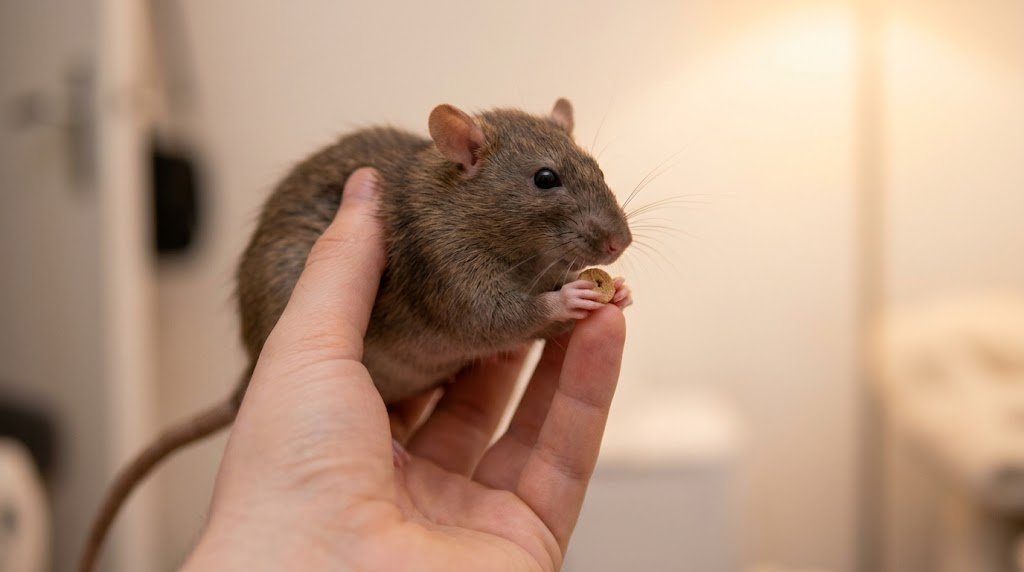
How to train a pet rat? Build trust first, then use tiny treats and short, fun sessions to reward the behavior you want. Rats are smart, food-motivated, and social, which makes them some of the easiest small pets to train.
This guide covers taming, clicker training, easy tricks, litter training, and common mistakes.
Not sure how much time you want to spend training and caring for a pet? See whether cats might be a simpler choice by reading Are Cats Low Maintenance Pets?
Can You Really Train a Pet Rat?
Yes. Rats are intelligent and can learn tricks and respond to their own names. Many owners teach them to come when called, stand up, spin, and even jump through hoops.
Time matters, though. Pet rats typically live about two to three years, so it helps to start training early and make every session count.
Before You Start: Build Trust First
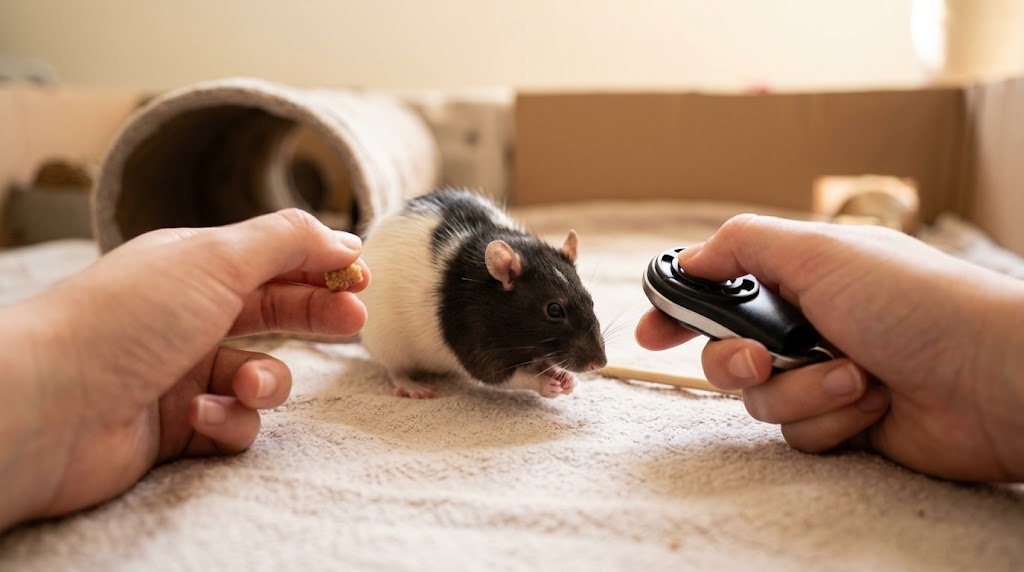
A scared rat won’t learn. Taming comes before tricks.
- Go slow. Let your rat sniff your hand, offer treats, and talk softly.
- Train low to the ground. Playpens are ideal. A fall from your hands can cause broken bones and internal injuries.
- Keep rats in pairs or groups. Rats are very social and do best in pairs. A lonely rat is often a stressed rat.
- Give daily time together. Rats need daily social time and at least an hour of exercise outside their cage every day.
What You Need to Train a Rat
- A clicker or marker word. A short word like “yes” works if the click scares your rat.
- Tiny treats. Small bits of banana, blueberry, unsalted popcorn, or cooked pasta can work. Keep pieces very small so your rat stays hungry for more.
- A target stick. A chopstick or pen works well.
- A quiet space. Pick a familiar, distraction-free room or table.
Avoid sugary, salty, or fatty snacks as everyday treats. Ask your vet if you’re unsure what’s safe.
How to Train a Pet Rat: Step by Step
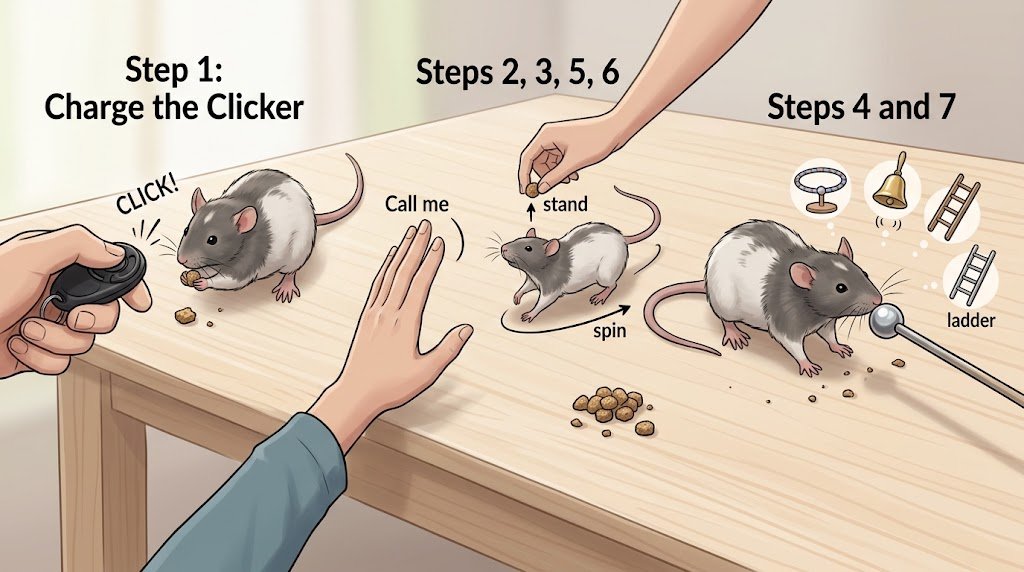
Step 1: Charge the Clicker
First, teach your rat that the click means a treat is coming. Click, then give a treat right away. Repeat several times until your rat perks up at the sound.
Remember the order: behavior, click, treat. The click doesn’t reward on its own. It works because it predicts the treat.
Step 2: Teach Its Name
Say your rat’s name when it’s in front of you. Reward it when it reaches for the treat. Slowly practice from farther away, such as from outside the cage.
Step 3: Come When Called
- Put your rat on a bed or large table with nowhere to hide.
- Move to the other side.
- Click and treat just as your rat reaches you.
- Once it runs to you reliably, say its name or “come” first.
- Slowly add distance and mild distractions.
Step 4: Target Training
Hold out a target stick. Click and treat any interest, even a glance. Then reward a step toward it, and finally a nose touch.
Targeting is a powerful skill. Once your rat learns it, you can use it to teach spinning, coming to you, stepping up, and walking into a carrier.
Step 5: Stand Up
Hold a treat just above your rat’s head. When it rises onto its back legs, click and treat. Add the word “stand” once it does this easily.
Step 6: Spin
Use a treat or target stick to lure your rat in a small circle. Click and treat when it completes the turn. Start with half-circles if needed.
Step 7: Build Up to Harder Tricks
After the basics, try jumping through a hoop, ringing a small bell, or climbing a ladder. Break each trick into tiny steps and reward each one.
How Long Should Sessions Be?
Keep them short. For most rats, three to five minutes is plenty at first. End on a success while your rat is still keen.
How to Litter Train a Rat
Rats can be litter trained, and it makes cage cleaning much easier.
- Watch where your rats usually go to the toilet.
- Place a litter tray there.
- Use a rat-safe litter that looks and feels different from the rest of the bedding.
- Move stray droppings into the tray to show them where it goes.
- Be patient. Most rats catch on with consistency.
Avoid pine (unless kiln-dried) and cedar bedding, which can irritate rats’ airways.
Tickling and Play: A Training Bonus
Rats “laugh.” When tickled, they make high-pitched chirps at around 50 kilohertz, too high for humans to hear. Researchers link these sounds to positive emotions and play.
More than 70 scientific papers have been published on rat tickling, and the general consensus is that it produces positive emotions in rats. Gentle play can build trust and even work as a reward. But every rat is different, so stop if yours pulls away.
Common Training Mistakes
| Mistake | Why It’s a Problem | Fix |
|---|---|---|
| Sessions too long | Rats get bored or full | Keep to 3–5 minutes |
| Treats too big | Rats fill up quickly | Use crumb-sized pieces |
| Training right after meals | Low motivation | Train when your rat is a bit hungry |
| Skipping trust building | A scared rat won’t learn | Tame first, then train |
| Punishing mistakes | Damages trust | Ignore unwanted behavior; reward good behavior |
| Training up high | Risk of dangerous falls | Use a playpen or low surface |
Troubleshooting
- My rat bites. Rats raised as pets and handled gently rarely bite. Look for fear triggers, and avoid grabbing from above.
- My rat hides or freezes. Go back to taming. Sit near the cage and offer treats without trying to touch.
- My rat suddenly seems scared or slow. See an exotic-pet vet. Pain or respiratory problems can make rats fearful.
- My rat ignores the clicker. Recharge it with extra click-and-treat practice, or switch to a soft word.
FAQs
How long does it take to train a pet rat?
It varies. Simple skills like coming to your hand may take a few short sessions. Complex tricks can take weeks.
Can pet rats learn their names?
Yes. With repetition and treats, many rats learn to come when called by name.
Is it easier to train male or female rats?
Personality matters more than sex. Some rats are bold and curious; others are shy and need more trust building.
Can you train an older rat?
Yes. Older rats can still learn, though you may need shorter sessions and easier tricks.
Should I train one rat at a time?
Yes. Train each rat alone in short sessions so it can focus, then return it to its cage mates.
Conclusion
So, how do you train a pet rat? Start with trust, charge a clicker, and use tiny treats in short sessions. Teach simple skills like name recognition, coming when called, and targeting, then build up to fun tricks.
Training keeps your rats’ busy minds active and makes your bond stronger. With patience and consistency, your rats may surprise you with how much they can learn.