
What are the best pets for apartments? For most people, the answer is a cat, a small or calm dog, a pair of guinea pigs, or a fish tank. The right choice depends on your space, schedule, budget, noise rules, and lease.
You’re not alone in asking. According to the American Pet Products Association (APPA), 94 million U.S. households own a pet, up from 82 million in 2023. Many of them live in apartments.
This guide covers the top apartment friendly pets, costs, rental rules, space needs, and how to choose.
Thinking about unusual pets for your apartment? Before choosing an exotic animal, read our guide on Can You Have a Penguin as a Pet? to learn what’s involved in keeping one.
What Makes a Pet Good for Apartment Living?
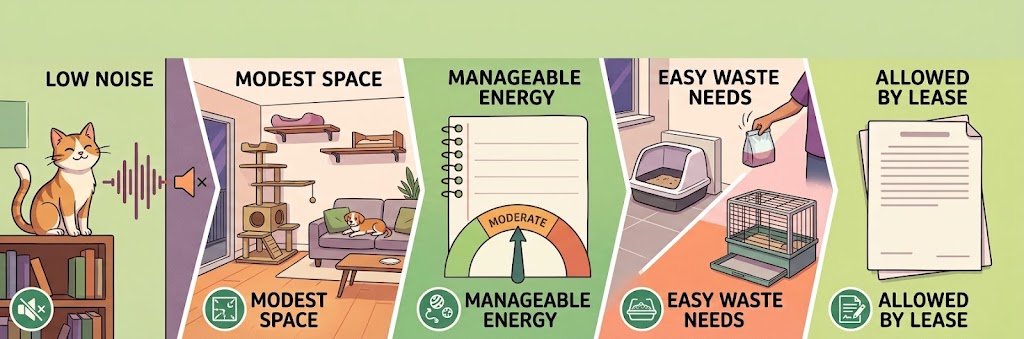
Size matters less than most people think. The best apartment pets share a few traits:
- Low noise. Thin walls mean barking or squawking can upset neighbors.
- Modest space needs. The pet should be happy in a smaller home with enrichment.
- Manageable energy. High-energy animals get bored and destructive indoors.
- No outdoor bathroom needs (or easy ones). Litter boxes and cages are simpler than walks from a fifth floor.
- Allowed by your lease. A perfect pet is useless if your landlord says no.
The Best Pets for Apartments
1. Cats
Cats are often the top pick for apartment living. They use a litter box, climb instead of roaming, and are usually quiet.
Cats are also very popular. APPA reports cat ownership grew 5% in 2025, reaching 53 million U.S. households, or 39%.
- Best for: Working professionals and small spaces.
- Space tip: Add height with cat trees and shelves.
- Watch out for: Scratching, litter odor, and boredom. Cats still need daily play.
2. Small or Calm Dogs
Yes, you can have a dog in an apartment. The American Kennel Club (AKC) says nearly any dog, big or small, can live in an apartment if it gets the care and attention it needs.
Energy level matters more than size. AKC notes many large dogs have low activity levels and are happy to lounge on the sofa. For example, greyhounds are fast but have low endurance and spend most of the day napping, which suits buildings that expect quiet pets.
Good apartment dogs often include the bichon frise, Cavalier King Charles spaniel, French bulldog, Havanese, Shih Tzu, and greyhound.
- Best for: People home often who enjoy daily walks.
- Watch out for: Barking and energy. High-energy breeds like Labrador retrievers and border collies are usually a poor fit for most apartments. Some small breeds, such as Yorkshire terriers and Pomeranians, are known for frequent barking, especially when left alone all day.
3. Guinea Pigs
Guinea pigs are gentle, social, and mostly active during the day. They make a friendly sound called “wheeking,” but they are rarely loud enough to bother neighbors.
They need more space than many buyers expect, and they do best in pairs. Animal Humane Society lists 7.5 square feet as the minimum cage size for two guinea pigs but recommends 10.5 square feet.
- Best for: People who want an interactive small pet.
- Watch out for: Daily hay, fresh veggies, and frequent cage cleaning.
4. Fish
A fish tank is one of the quietest pet options. Fish need no walks and don’t disturb neighbors.
However, “easy” is a myth. Tanks need filters, heaters (for tropical fish), water testing, and regular water changes. A small tank is not always simpler, because water quality changes faster in less water.
- Best for: Calm homes and people who enjoy a hobby.
- Watch out for: Tank weight on upper floors and power outages.
5. Hamsters
Hamsters are small, cheap to feed, and fit in tight spaces. They’re a common pick for small apartments.
- Best for: Night owls, since hamsters are mostly active at night.
- Watch out for: Wheel noise at night, and a short lifespan. Most hamsters should live alone.
6. Rabbits
Rabbits can live indoors and can learn to use a litter box. But they’re often underestimated.
- Best for: Owners with time for daily exercise and a rabbit-proofed room.
- Watch out for: Chewing cords and furniture, the need for daily roaming time, and specialist vet care.
7. Birds
Small birds like budgies can suit apartments. They’re social and fun to watch.
- Best for: People home often who want an interactive pet.
- Watch out for: Noise. Many parrots are too loud for shared walls. Smaller species are usually a safer bet.
Apartment Pets Compared
| Pet | Noise Level | Space Needed | Daily Time | Can Be Left Alone? | Social Needs |
|---|---|---|---|---|---|
| Cat | Low | Small to medium | Moderate | Healthy adults handle a workday | Moderate |
| Small/calm dog | Low to high (varies by breed) | Varies | High | Limited; needs breaks | High |
| Guinea pigs (pair) | Low to moderate | Large cage | Moderate | Yes, for a workday | High (with each other) |
| Fish | Very low | Small to medium | Low to moderate | Yes, short periods | Low |
| Hamster | Low (wheel at night) | Small | Low | Yes, for a workday | Low |
| Rabbit | Low | Medium; room to roam | Moderate to high | Yes, for a workday | High |
| Small bird | Moderate | Small to medium | Moderate | Limited | High |
For quiet pets for apartments, cats, fish, hamsters, and guinea pigs usually rank best. Dogs and birds vary widely by breed and species.
Cost of Owning a Pet in an Apartment
Renters face two kinds of costs: pet care and housing fees.
Pet Care Costs
The American Society for the Prevention of Cruelty to Animals (ASPCA) estimates annual totals of $1,391 for a dog and $1,149 for a cat. Small pets usually cost less per year, but setup costs (cages, tanks, filters) can be high. Emergency vet care can cost far more than routine care for any pet.
Pet Rent and Deposits
Many landlords charge extra for pets. RentCafe puts average U.S. pet rent at $36 a month in 2025, with pet deposits averaging about $300. Some landlords charge both a refundable deposit and a non-refundable fee.
That $36 a month adds up to over $400 a year, so include it in your budget.
Check Your Lease First
Before choosing a pet, read your lease carefully. An analysis of more than 363,000 leases created in 2025 found that 49% explicitly allowed pets.
Look for:
- Pet types allowed. Some leases allow cats but not dogs.
- Weight or breed limits. Common for dogs.
- Number of pets. Many buildings cap it at one or two.
- Fees. Pet rent, deposit, and one-time fees.
- Small caged pets and fish. These are sometimes allowed even in “no pet” buildings. Ask in writing.
Service animals and emotional support animals have separate rules. RentCafe notes they are exempt from pet fees, deposits, and pet rent under federal fair housing laws. Rules and documentation needs can vary, so check with your landlord or a local housing agency.
Tips for Keeping Pets Happy in Small Spaces
- Use vertical space. Cat trees, wall shelves, and tall cages add room without adding floor space.
- Stick to a routine. Feed, play, and walk at the same times daily.
- Reduce noise. Rugs muffle paws, and quiet wheels help hamsters.
- Control odors. Scoop litter daily and clean cages often.
- Pet-proof your home. Hide cords, secure trash cans, and remove toxic plants.
- Provide enrichment. Puzzle feeders, toys, and rotation keep pets from getting bored.
Which Apartment Pet Is Right for You?
Ask yourself:
- Schedule: Are you home enough for a dog or bird, or is a cat or fish a better fit?
- Space: Do you have room for a proper cage, tank, or litter box?
- Noise: How thin are your walls?
- Budget: Can you cover care, pet rent, deposits, and emergencies?
- Lease: Is this pet allowed in writing?
- Commitment: Some pets, like cats and rabbits, can live for many years.
FAQs
What is the best pet for a small apartment?
For most people, a cat. Cats are quiet, use a litter box, and adapt well to small spaces. Fish and hamsters work well in very small homes.
What is the most low maintenance pet for an apartment?
Hamsters and fish take the least daily time. Still, both need regular cage or tank cleaning.
Can you have a big dog in an apartment?
Yes, if the dog is calm and gets enough exercise. Some large, low-energy dogs adapt better than small, high-energy ones. Check your lease for weight limits.
What are the quietest pets for apartments?
Fish, cats, hamsters, and guinea pigs are usually quiet. Dogs and birds vary by breed and species.
Do I have to pay pet rent for a fish or hamster?
It depends on your landlord. Some charge nothing for small caged pets or fish, while others do. Always ask before you move in.
Conclusion
So, what are the best pets for apartments? Cats top the list for most renters, with calm dogs, guinea pigs, fish, and hamsters close behind. The best choice is the one that fits your space, schedule, budget, and lease.
Start by checking your lease. Then visit a local shelter or rescue, meet a few animals, and ask staff which ones suit apartment life.