
How do you choose a pet for kids? Choosing a pet for kids can feel exciting, but the best choice is not always the animal a child likes most. The right pet depends on the child’s age, maturity, the family’s schedule, available space, budget, and how much responsibility adults are prepared to take on.
A pet is a long-term commitment. Before bringing an animal home, families should think about daily care, veterinary needs, food, housing, exercise, cleaning, and the animal’s expected lifespan.
How old should a child be before getting a pet?
There is no single age at which every child is ready for a pet. Younger children generally need much more adult supervision, while older children can gradually take responsibility for age-appropriate tasks.
Parents should remember that children should not be expected to provide all of an animal’s care. Adults remain responsible for making sure the pet is properly fed, housed, supervised, exercised, and taken to the veterinarian.
Best Pets by Age
| Child’s age | Better fits | Notes |
|---|---|---|
| Under 5 | Fish, or a family pet you already have | Avoid reptiles, amphibians, poultry, and rodents. Supervise all contact. |
| 5–10 | Fish, small pets with adult help | Kids help with simple tasks; adults do the real work. |
| 10–13 | Dog, cat, or rabbit | Kids take on more, but adults still check daily. |
| Teens | Dog, cat, bird, or reptile | Adults still provide oversight and money. |
Which pets are good for children?
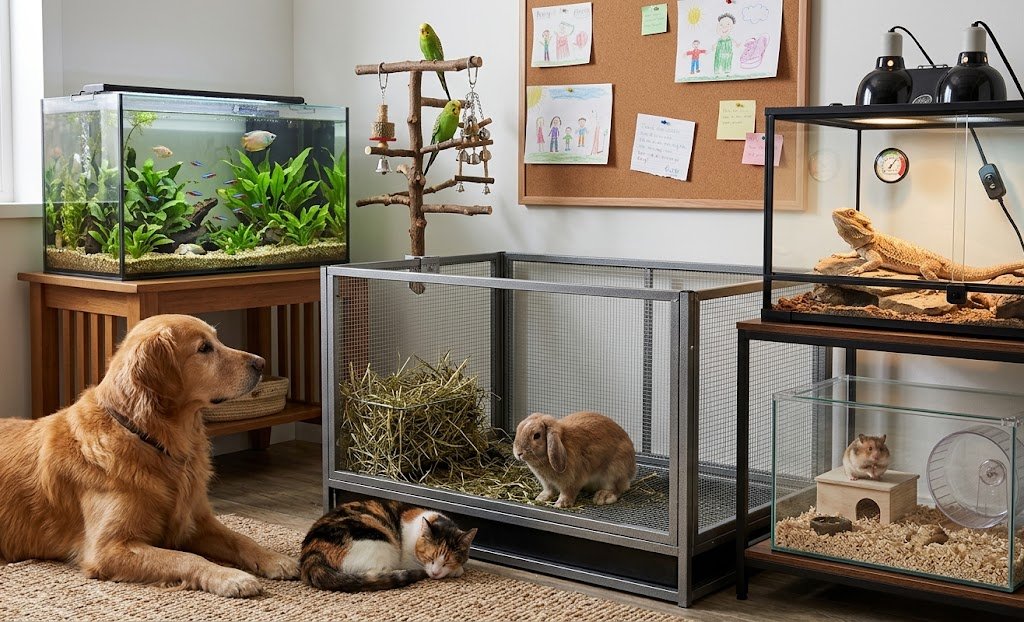
Different animals have very different needs. A pet that looks easy to care for may still require specialized food, housing, cleaning, exercise, or veterinary attention.
Fish
Fish can be a good introduction to caring for an animal because children can participate in feeding and observing them. However, fish tanks still require regular maintenance and water care, so adults need to remain involved.
Guinea pigs
Guinea pigs can be suitable for older children when adults provide supervision. They require appropriate nutrition, including vitamin C, and generally do better with companionship.
Rabbits
Rabbits require more care than many families expect. They need appropriate housing, exercise, space, and a high-fiber diet. Children can help with care, but adults should remain responsible for the animal’s overall welfare.
Hamsters
Hamsters are small and may appeal to children, but they are nocturnal. This means they are often most active when children are sleeping. Young children should always be supervised around them.
Dogs
Dogs can become important family companions, but they require significant time, money, training, exercise, and veterinary care. Children can help with age-appropriate responsibilities, but adults remain responsible for the dog’s care and safety.
Cats
Cats can be good family pets, but they still require daily care, litter maintenance, play, feeding, and veterinary attention. Children should be taught how to interact with cats safely and respectfully.
Parakeets
Parakeets can be appropriate for older children and teenagers. They need regular interaction and time outside their cage, as well as appropriate food, housing, and veterinary care.
Bearded dragons
Bearded dragons can be interesting pets for older children and teens, but their care is more specialized. They require appropriate heat and lighting, and families should understand the potential Salmonella risk.
Pet-by-Pet Comparison
| Pet | Typical lifespan | Kid-readiness | Biggest thing to know |
|---|---|---|---|
| Fish | Varies; goldfish often 10–15 years | Any age, adult-led | Tanks need regular cleaning and water care |
| Guinea pig | About 5–7 years | About 5+, with supervision | Needs vitamin C in its diet; does better with company |
| Rabbit | About 8–12 years | About 10+ to help; adult-led | Needs space, exercise, and a high-fiber diet |
| Hamster | About 1–3 years | About 5+, with supervision | Nocturnal, so active when kids sleep |
| Dog | More than a decade | Family pet; kids help from about 10 | Bites to children are common; supervise always |
| Cat | More than a decade | Family pet; kids help from about 10 | Litter, play, and vet care are daily and yearly jobs |
| Parakeet | Often 7–15 years | Older kids and teens | Needs daily interaction and time out of the cage |
| Bearded dragon | About 8–12 years in good conditions | Older kids and teens | Needs specialized lighting and heat; Salmonella risk |
What should families consider before getting a pet?

Time
Every animal needs regular care. Families should consider who will feed the pet, clean its living area, provide exercise, arrange veterinary care, and look after it during vacations or busy periods.
Space
The amount of space available can affect which animals are appropriate. Dogs may need room for exercise, rabbits need suitable housing and exercise areas, and even small pets require an appropriately sized enclosure.
Money
The purchase or adoption fee is only part of the cost. Families also need to budget for food, equipment, routine veterinary care, vaccinations, grooming, cleaning supplies, and unexpected medical expenses.
Allergies and health
Families should consider allergies and other health concerns before choosing an animal. Parents should also teach children to wash their hands after handling animals and their food, cages, litter, or other supplies.
Safety
Children should always be supervised around animals when necessary. Parents should teach children not to disturb pets while they are eating, sleeping, frightened, or caring for their young.
The Real Cost of a Pet
Pet ownership involves both recurring expenses and one-time costs. Families should plan for the full financial commitment rather than only the initial cost of getting the animal.
| ASPCA estimate | Dog | Cat |
|---|---|---|
| Annual total | $1,391 | $1,149 |
| One-time starting costs | $1,030 | $455 |
| First-year total | $3,221 | $1,904 |
How can parents teach kids to care for pets?
Parents can gradually involve children in appropriate tasks. Younger children can help with simple activities under supervision, while older children can take on more responsibility.
Parents should still monitor the animal’s care and step in when needed. Responsibility should increase according to the child’s maturity rather than age alone.
What is the best pet for a child?
There is no single best pet for every child or family. The right choice depends on the child’s age and maturity, the animal’s needs, the family’s schedule and budget, available space, and the adults’ willingness to take responsibility for the animal throughout its life.
Before bringing a pet home, families should research the animal’s care requirements and make a realistic plan for feeding, housing, exercise, cleaning, veterinary care, and long-term costs.